Tuesday, 24 March 2015

Persuasion by Jane Austen

"Sir Walter Elliot, of Kellynch-hall, in Somersetshire, was a man who, for his own amusement, never took up any book but the Baronetage; there he found occupation for an idle hours, and consolation in a distressed one ......"

Persuasion was the only major Austen novel that I had not read, so I was thrilled when Heidi at Literary Adventures Along the Brandywine announced her read-along.  I wasn't expecting to enjoy the novel quite as much as Pride and Prejudice, one of my favourites, but I'd heard enough positive reviews to whet my curiousity. And so I plunged in.

Anne Elliot is one of three daughters of Sir Walter Elliot, a vain baronet who is obsessed with the peerage.  While her sister, Elizabeth, is somewhat bossy, and Mary proves a proud, yet questionable, invalid, Anne shows a quiet reserve with more than average good sense and judgement.  Eight years ago, her engagement to Captain Frederick Wentworth was almost certain, but without a mother for guidance, and influenced by a respected friend of the family, Lady Russell, she broke off the engagement with a deep regret.

Manor House, Somersetshire (Halsway Manor)
source Wikipedia
Now, eight years later, Anne is confronted with a number of upheavals in her life. Not only does she and her family have to leave their ancestral home, Kellynch-hall, because of reduced finances, but Captain Wentworth has returned, and to further complicate matters, his sister and her husband are the new tenants of Kellynch-hall.  The blows would have reduced a weaker woman to despondency, but Anne is not only resourceful, she has learned to suffer life's troughs with resilience, and her positive attitude brings her through the stormy seas.

Initially, Captain Wentworth is all resentment and cool responses, but gradually, as he sees Anne's quiet sacrifices, calm demeanour, and strength of character, his acrimony softens towards her.  Yet, at the same time, he appears to be playing the eligible bachelor, and it is uncertain as to which woman he will chose to be Mrs. Wenworth.  Both of Anne's sisters-in-law, Henrietta and Louisa, vie for the title and Anne must watch the perceived courtships with an uneasy mind.  A near-tragedy causes introspection in more hearts than one, Mr. Eliot, Anne's cousin and heir to Kellynch, enters the picture to further obscure the matters of courtship, but the final culmination exemplifies that a steadfast love is strengthened by misfortune and time, and the past lovers reunite in a now more matured and seasoned alliance.

Lyme Regis
Persuasion is a tale of new beginnings and second chances, not only for Anne and Wentworth, but for the characters surrounding them. Anne's family, because of their financial straits, must begin a new life in Bath; both the Musgrove girls will be looking forward to the start of their married lives; and even Mrs. Smith, who has found herself in poverty after her husband's death, is given a second chance at the end of the book as, with help from Wentworth, she recovers money from her husband's estate that will help her to live more comfortably.

While Austen, as per her usual method, allows the reader to examine certain segments of society, in this book especially, she seems to be highlighting the movements between the social classes, either by marriage or by economic necessity.  Within Anne's family, we not only have the family as a whole dropping in perceived standing by the lack of money to maintain their position at Kellynch, we also have the numerous characters dealing with the descent with different outlooks.  Sir Walter is obsessed with his Baronetage book and the importance of his place within the realm of society.  At first, he employs denial as to their new position, but thanks to a rather blind self-importance, is able to be persuaded to accept their new situation as if nothing has practically changed.  Anne's sister, Elizabeth, too, acts as if nothing has altered, yet you can see at certain points in the novel that she is aware of the disadvantage of their new situation and that they must have a heightened awareness of appearance to maintain the respect and dignity that they view as a societal necessity.  Anne does not seem to be bothered by the family's reduced circumstances, as position to her comes secondary to character and honesty and integrity.  In the old governess, Mrs. Smith we can examine what has come from her rise in stature upon her marriage, and then her subsequent fall upon her husband's death when she finds herself in financial troubles.  Finally, cousin William Elliot falls from his seat of grace with his scandalous behaviour at the end of the novel.

Pulteny Bridge, Bath
18th century
source Wikipedia
We are given the title of Persuasion for the book, yet Austen did not choose this title; instead her beloved brother, Henry, gave the book its name, as it was published posthumously, and there is no indication of what Austen's preferred title would have been.  Cassandra Austen, Jane's older sister, reportedly said that a name for this novel had been discussed, and the most likely title was "The Elliots," but as Austen passed away before selecting a definitive title, no one will know for certain her final choice. Nevertheless the word "persuasion", or a derivative of it, occurs approximately 30 times in the novel, a good indication that it is one of the main themes.  Yet as I finished the novel, what metamorphosed out the "persuasion" was the stronger theme of duty.  While Wentworth still appears to be disgruntled by Anne's choice to follow her family's wishes in breaking off their engagement eight years before, she however appears to have a different sentiment.  At the end of the novel, Anne concludes:

"I have been thinking over the past, and trying impartially to judge of the right and wrong, I mean with regard to myself; and I must believe that I was right, much as I suffered from it, that I was perfectly right in being guided by the friend whom you will love better than you do now.  To me, she was in the place of a parent.  Do not mistake me, however.  I am not sayng that she did not err in her advice.  It was, perhaps, one of those cases in which advice is good or bad only as the event decides; and for myself, I certainly never should, in any circumstance of tolerable similarity, give such advice.  But I mean, that I was right in submitting to her, and that if I had done otherwise, I should have suffered more in continuing the engagement than I did even in giving it up, because I should have suffered in my conscience.   I have now, as far as such a sentiment is allowable in human nature, nothing to reproach myself with; and if I mistake not, a strong sense of duty is no bad part of a woman's portion."

In the book Anne is consistently dutiful, to her friend, Mrs. Smith, to her family and, more importantly, to her own conscience; and so we learn that a strong sense of duty and obedience to it is more crucial than any personal inclinations or aspirations.

Sandhill Park, Somerset (1829)
J.P. Neale/W. Taylor
source Wikipedia
Persuasion deviates from Austen's usual style and content.  By having a hero without ties to nobility, Austen explores in depth an area of society that had to date been given only a cursory treatment by her. Anne, as an older heroine, is presented in a new way; the reader learns of her character not necessarily through how she actually behaves, but more through her silence and by seeing her in contrast to the intensely flawed people around her. Contrary to other Austen novels, the romance develops almost in isolation, as the characters hold little conversation with each other until the end of the novel.  While the novel was interesting for these new features, I felt it to be weaker than Austen's previous novels, lacking a certain plausibility at times and a solid cohesiveness.  As she was writing Persuasion, Austen was ill with the disease that would eventually kill her, and because of this fact, her usual detailed pattern of revision was not completed; in this light, the diminished quality of the novel can certainly be understood.  However, while not shining with her usual brilliance, Austen still produced a jewel in its own right, and perhaps more intriguing because of its flaws, as these flaws contribute to its uniqueness.  As the character of Anne experiences a new beginning in Persuasion, so does the novel indeed appear to symbolize a new beginning by Austen, this beginning sadly cut short due to her untimely death.


Further reading:


Monday, 23 March 2015

On The Road by Jack Kerouac

"I first met Dean not long after my wife and I split up."

Having read Kerouac's travelogue, The Dharma Bums a couple of years ago, I was really looking forward to this read, as On The Road is considered Kerouac's finest work.  With great anticipation I picked up the book, began to read, and what did I find ........???

A Roman a clef, with the characters acting as stand-ins for Kerouac and his buddies and their real life adventures, the novel traces their journeys as they travel back and forth across America between 1947 and 1950.  This Beat Generation, or post-World War II writers, Kerouac, Allen Ginsberg, William Burroughs and Neal Cassady are mostly drunk, high, stoned or looking for sex, throughout most of the novel. The rambling, sparse, uninteresting prose had me nearly catatonic about one-quarter of the way into the book and it was only with a supreme effort of will that I managed to finish.  Brutal.

So what was the difference between The Dharma Bums and On The Road? Why did I love one and hate the other?  Well, with The Dharma Bums, while there was drug use it somehow seemed more innocent and less destructive. The characters sincerely appeared to be grappling with the purpose of life. There was thought and philosophy and even some solid descriptions of the places visited.  On The Road related the meaningless conduct of a bunch of miscreants who had no concern for anyone but themselves, were too stoned to think most of the time, and when they did, it was often complete nonsense. In real life, most of the characters died before their 40th or 50th birthdays from either a drug or alcohol-related death.  Such a sad waste of life, with nothing romantically counter-cultural, or excitingly anti-establishment about it.

One interesting anecdote is that the manuscript for this book was typed on a continuous scroll of one hundred and twenty feet of tracing paper taped together, single-spaced without margins or paragraph breaks.  A quirky writing method from a very experimental author.

The "On The Road" Scroll
Boott Cotton Mills Museum 2007
source Wikipedia

Sunday, 22 March 2015

Ode VIII Quiet Night by Fray Luis de León


Fray Luis de León was a poet, an Augustinian friar, an academic and a theologian who lived during the Spanish Golden age.  This poem was one of 23 original poems composed by him during his lifetime; he also translated the Book of Job and the Song of Songs into Spanish from the Latin Vulgate, a forbidden act which landed him in prison.

Sadly the text of this poem is too long to include and I can't find any online sources but it is included in the book The Golden Age ~ Poems of the Spanish Renaissance.  Here is an except:

   
Source Wikipedia
When I contemplate the heavens
embellished and adorned with countless lights,
then look down at the earth
enveloped in dark night
and buried deep in oblivion and sleep,
     the love and sorrow I feel
awaken in my breast an ardent longing;
my eyes, become like fountains,
let flow abundant streams,
and at last, in woeful tones, my voice does call:
     "Oh, home of so much grandeur,
temple of light, of clarity, of beauty:
my soul was born for your heights,
yet what immense misfortune
keeps it in this vile prison, in the dark?
     "What mortal misperception
moves my senses so far away from truth
that, leaving your sacred good,
forgetting they wander, lost,
following vain shadows, illusions of good?
      "Man is given over
wholly to sleep, not caring for his fate,
while heaven, with silent steps,
keeps turning round, keeps turning,
stealing from him the hours of his life.
      "Oh moral men, awake!
Open your eyes and see the harm you do.
Can your immortal souls, 
created for such great good,
survive on shadows and on mere deceit?


de Leon begins with the poet envisaging heaven from his place on earth, yet he quickly reverses the observation by viewing earth from the vantage point of heaven.  From the first viewpoint, heaven looks grand and beautiful but when his perspective is reversed, the earth is seen as a place of devastation and turmoil, as man forgets the purpose of his creation and allows precious time to be stolen from him.  The poet uses an apostrophe to awaken his fellow man the plight of his dying soul and encourages his amelioration.  There is a wonderful weaving of the celestial planets into heaven's fabric, personifying their glory and importance, while communicating divine beauty.

Such a lovely poem and as a bonus, an opportunity to practice my Spanish!

Deal Me In Challenge #8 - Seven of Diamonds


Saturday, 21 March 2015

The Voyage Out Read-Along


In a spur-of-the-moment decision, Jason at Literature Frenzy,  Ruth at A Great Book Study, and I decided to join O at Behold the Stars to read Virginia Woolf's The Voyage Out beginning on March 26th, which marks the 100th Anniversary of its publication.  The Voyage Out is Woolf's first novel and includes the character Mrs. Dalloway from her later novel of the same name. It's going to be a fun time had by all, if anyone else would care to join us.  To sign up, please visit Behold the Stars.


Wednesday, 18 March 2015

Top Ten Tuesday: Books on my Spring TBR List

I do realize that it's Wednesday and not Tuesday, but that's how I've been running lately ....... behind.  Do you know how life can throw you a curve ball? Well, I was thrown a whopper a couple of weeks ago, which is why I've been blog and Goodreads MIA.  My mom had some health issues and due to medical errors now has a condition that is quite sad and is going to affect her for the rest of her life.  Needless to say, the last few weeks have been physically and mentally draining and I haven't had the time to blog, let alone the desire to.  However life does go on and, while I still don't quite feel myself, I'm endeavouring to force myself to get back to it.  Thanks so much to those who have sent me notes asking about my absence and then wishes of condolence.  It's nice to be missed and know that I have prayers of support.


So on to my Spring reads from this week's meme from The Broke and the Bookish!

1.
A read-along with O, Ruth and Jason (I think)

2.  
continuing with Hamlette's read-along with has been going along just dandy in my absence. 


3.  
I inadvertently discovered that this book is connected to Notes to the Underground, which I had planned to read, so I added it too.


4.  
This book is a response to the one above.  I've heard it's weird so perhaps reading Chernyshevsky first will give me some insight


5.  


6.  
The next book on my WEM biographies list

7.  
Reading in May with Cat and Cirtnece (anyone else care to join us?)  This will be my 6th reading of the poem.

8.  
I'd planned to read this in the spring, but now I think I should read Ovid's Metamorphoses and The Decameron first.  Yikes!  Why do all these books connect?


9.  
My Goodreads friend's book that is based on The Cantebury Tales, which will complete my project for the year.  I've heard that his book has made it as high as #18 on Amazon's poetry bestseller list.  I can't wait to read it.

10.
Ah, one of my absolute favourites.  I'll be reading it for perhaps the 5th time for my Jane Austen Project.


Tuesday, 3 March 2015

Top Ten Tuesday: Favourite Books from the Last Three Years

Since I haven't participated in a Top Ten Tuesday with The Broke and the Bookish for awhile, and I've been staring blankly at my reviews in draft for the last few days, I thought it might stir the literary juices to participate in this Tuesday's topic.  My favourite books from the last three years were, surprisingly, not hard to choose.  Well, yes they were, because there were so many of them.  So without further ado ......

1.  Paradise Lost


2.  Homer's The Iliad (translated by Richard Lattimore)


3.  The Divine Comedy - Dante Alighieri (translated by John Ciardi)


4.  War and Peace - Leo Tolstoy (translated by Louise and Aylmer Maude)


5.  Confessions - Saint Augustine (translated by Garry Wills)


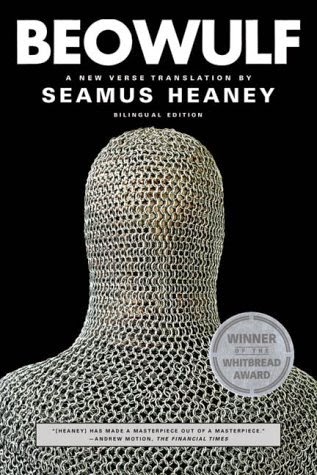
6.  Beowulf (translated by Seamus Heaney)


7.  Pride and Prejudice - Jane Austen


8.  The Three Theban Plays (Oedipus Rex, Oedipus at Colonus & Antigone) - Sophocles (translated by David Green & Richard Lattimore)


9.  The House of Mirth - Edith Wharton


10.  To The Lighthouse - Virginia Woolf


Honorable Mentions:


The Odyssey - Homer (translated by Richard Lattimore)


The Song of Roland (translated by Dorothy Sayers)


I Capture the Castle - Dodie Smith


The Man Who Mistook His Wife for a Hat - Oliver Sacks